CLAES, COOSJE & ME
a travelogue, a rendezvous , and a critique
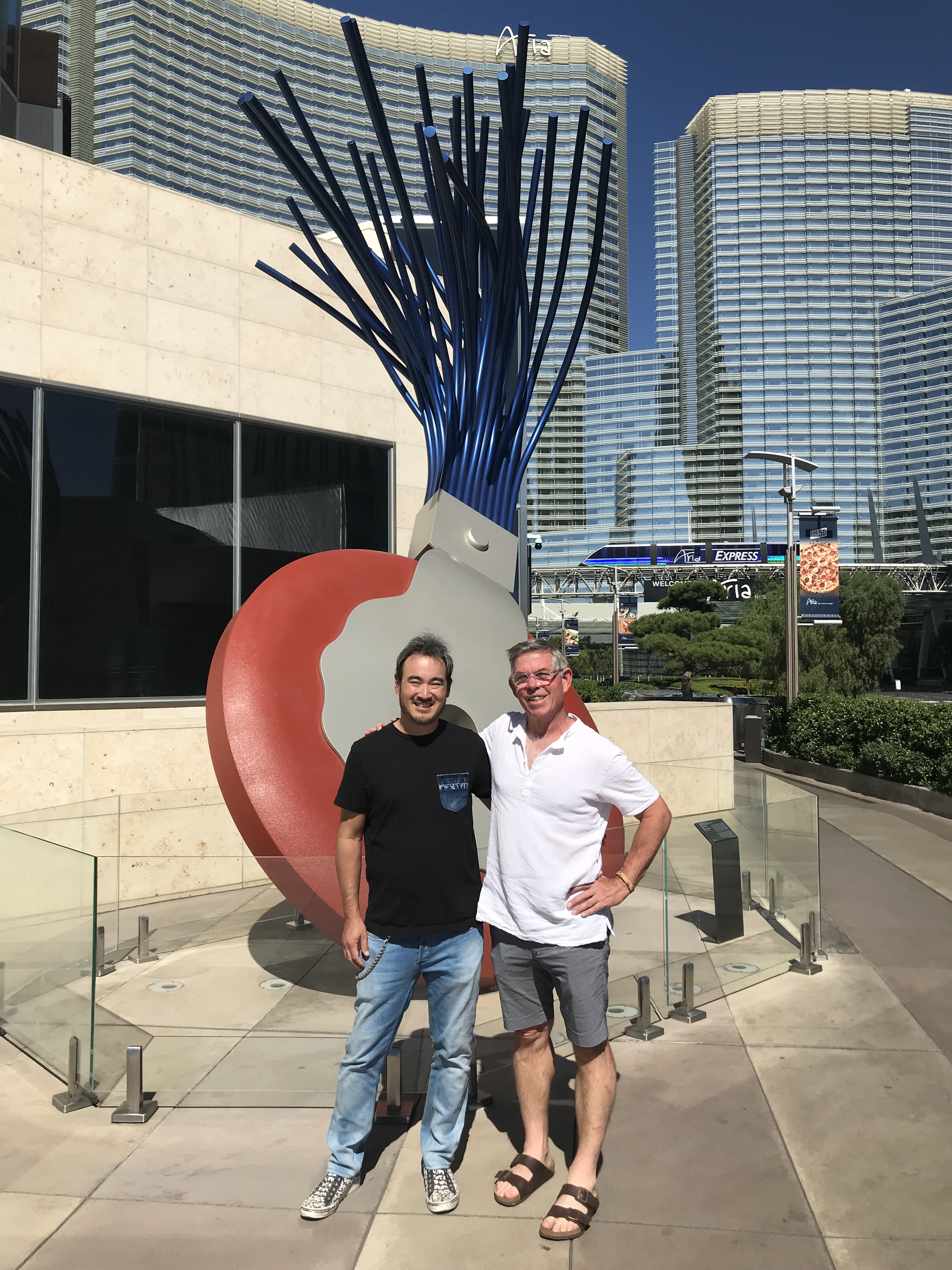
Sculpture: Scale X: Typewriter Eraser
Where: Las Vegas (and Seattle)
Installed: 1999
Visited: August 4, 2019
Met: Wayne Kageyama
Blog Entry: August 19, 2019
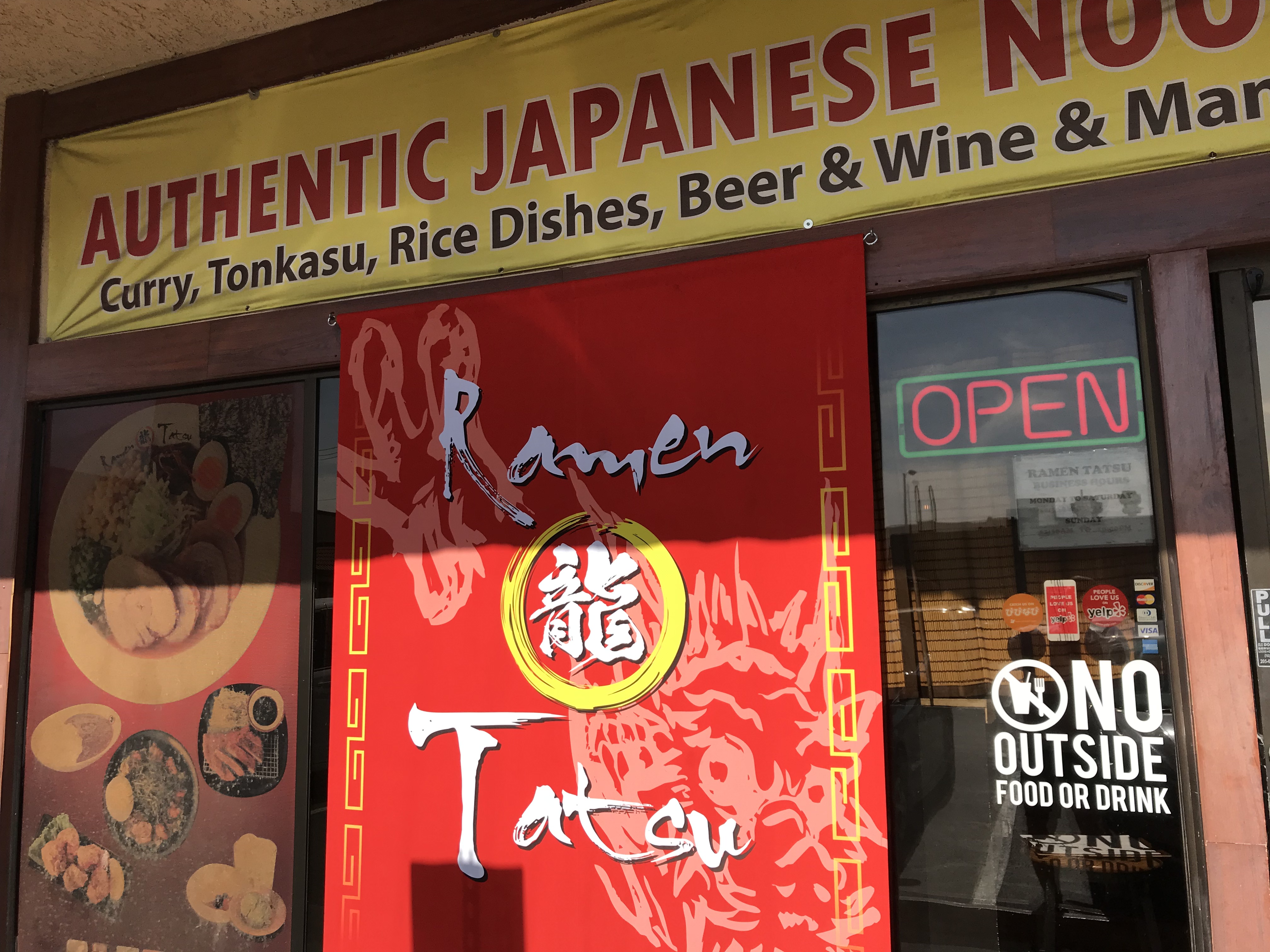
Every time I go to Vegas—usually I’m cutting through—I stop at Ramen Tatsu, a few miles west of the Strip in the District One strip mall that’s a part of Chinatown. Owner/chef Wayne Kageyama opened it in 2013, and today, in its modest way, it is considered one of the best ramen restaurants in Las Vegas.
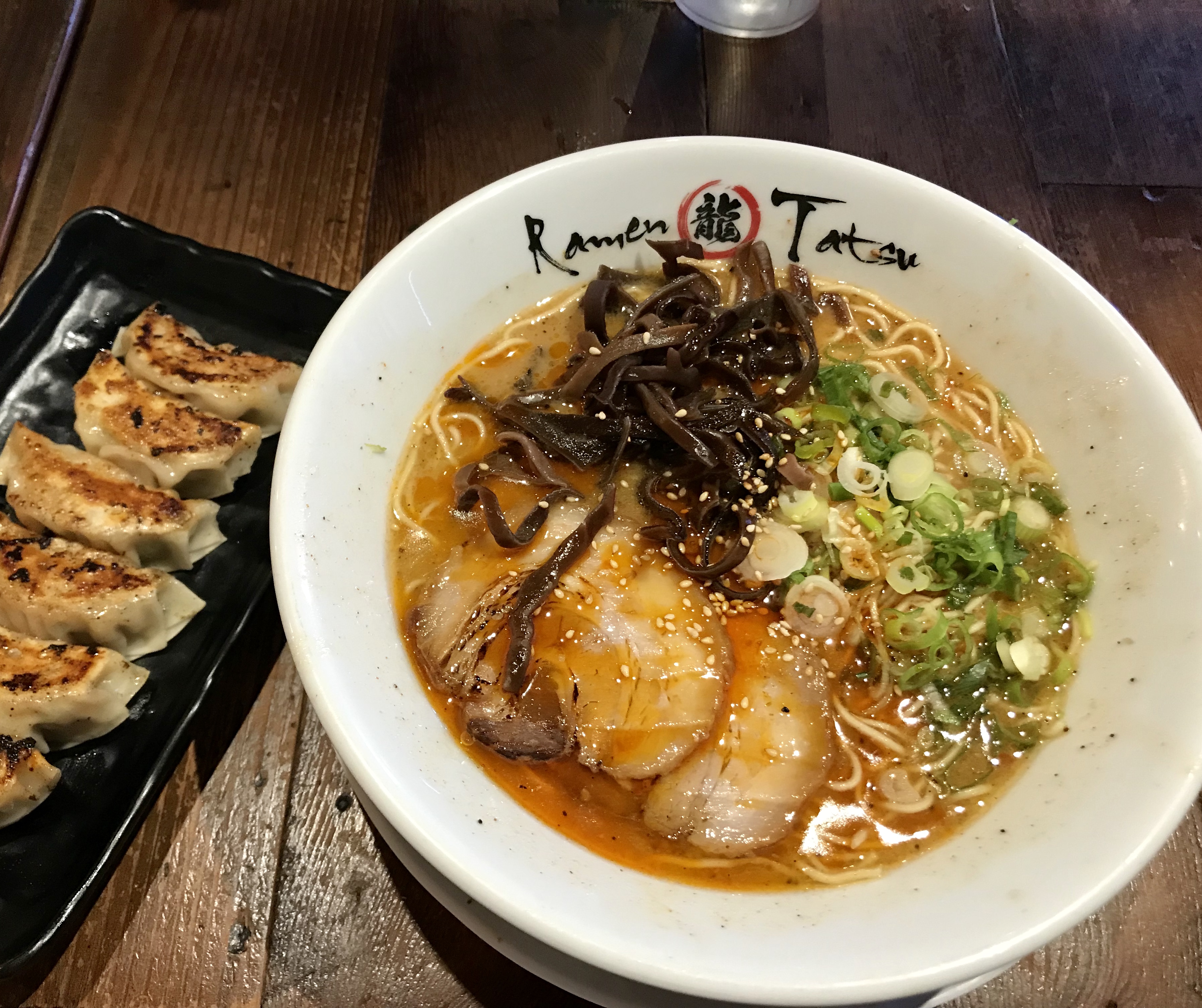
Wayne was a student in my senior English class during the 1996-97 school year. It was a tricky year for both of us. Wayne lost 15 or so friends over the summer, and I was finding my way at a new school.
Having taught for 9 years at Leuzinger High School in Lawndale, CA—a low-to-middle class community with Black, Latino, Tongan and Vietnamese kids—I now found myself teaching at the academic powerhouse that was/is Palos Verdes Peninsula High School in Rolling Hills Estates. In an odd way, we both were re-establishing ourselves, fortifying confidences.
I loved my students at Leuzinger but didn’t see myself careering there, and Peninsula High, just five miles away but feeling like a 1000 was intimidating. I gave an assignment to the students in my five classes and everyone turned it in the next day. Every. One. Fifty percent of my honors students at Leuzinger turned in their homework.
But let’s return to Wayne, because I know what you’re thinking: 15 friends? Was there an earthquake? No. Maybe your mind is flashing to Haruki Murakami’s 2013 novel Colorless Tsukuru Tazaki whose eponymous narrator’s four best friends refuse to talk to him after high school, and he cannot figure out why. That’s not it, either.
In the 1980s, with Toyota and Honda factories nearby—this is the South Bay of Los Angeles—droves of Japanese families were moving into Palos Verdes (PV). (In years since, Persian, Jewish, Indian, Korean, Filipino and Taiwanese have moved into the previously Beach Boys-white community. It’s one reason I have loved teaching here.)
Wayne and his brother were born in East L.A. and upon his parent’s divorce at age three, it was decided that Wayne and his brother would go with his Mom back to Japan. Wayne lived in Kobe, near Osaka until age 9, and then moved back—to PV where his father now lived. English words had long since evaporated off his tongue. And it possibly didn’t help that in Wayne’s ESL middle school class, 28 of 30 kids were Japanese (the other two were Korean—today, I’m guessing numbers might be reversed). These kids became tight friends, and by the time they matriculated to high school things were peachy. Slowly, Wayne was becoming bi-lingual.
But then the Japanese economy bottomed out. Completely, in 1995. Families were forced to move back. Wayne stayed, and the summer before his senior year, his friends left.
When Wayne relayed this story to Barb and I, he shook his head and laughed. “My dad said, ‘You’re just going to have to find American friends.” And then he laughed again. And shook his head again.
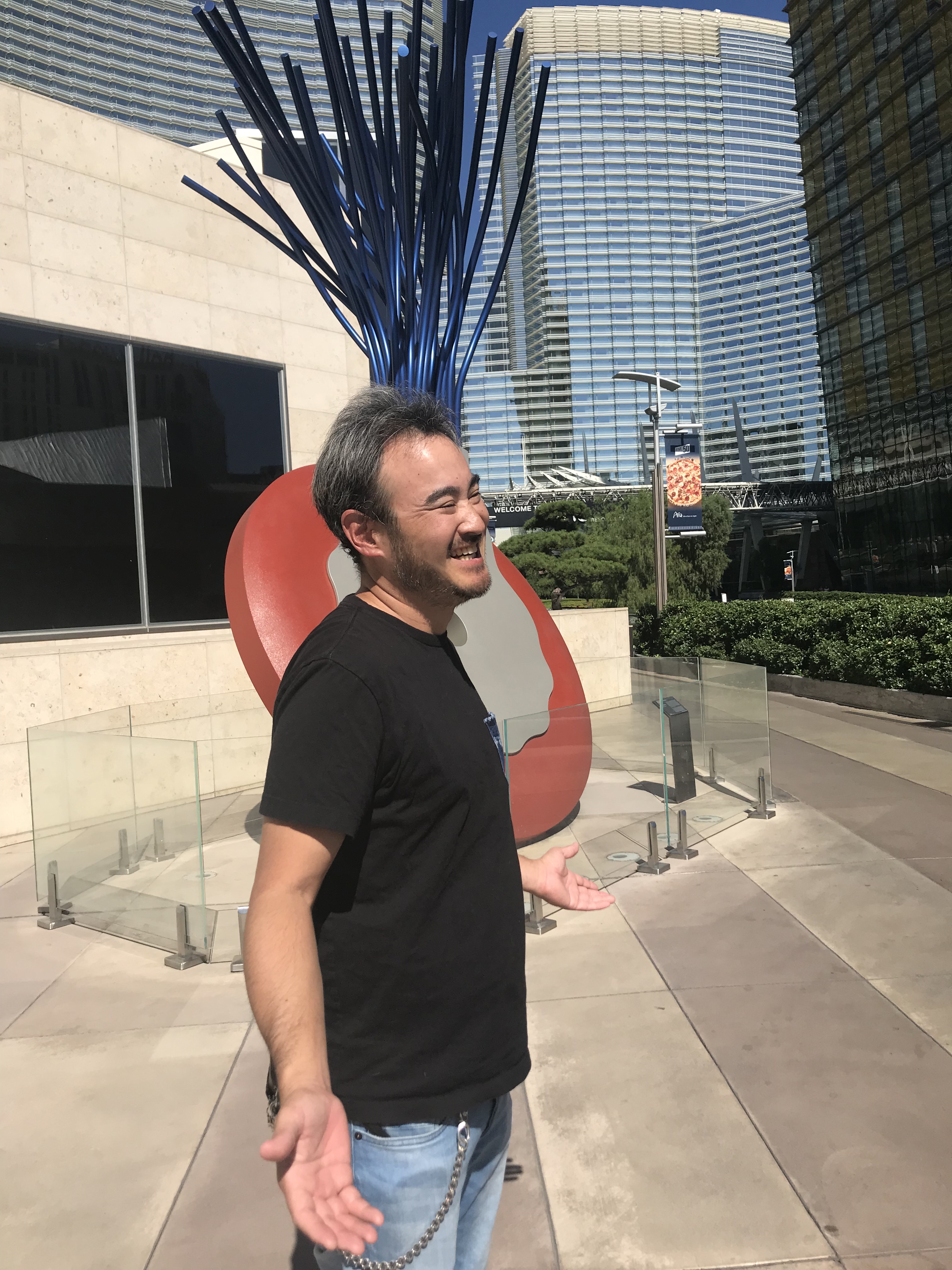
In that first semester of his senior year, Wayne sometimes stopped in at lunch to chat. I remember he wasn’t eating. He said, “I’ll eat half a bagel and I’m full.” His counselor was worried. I was feeling anxiety myself; it wasn’t that I was unprepared, but I was waking up at 4 a.m. with a new idea of what to teach that day, rushing to the copy machine during my prep period, second-guessing myself. I should have been going to the lunchroom and meeting teachers.
But Wayne and I survived, now, didn’t we? We went bowling together, that year. We enjoyed each other’s company. We fell out of touch and reconnected on Facebook. He got a job for a golf company and did well for many years until another economic bust—this time in the U.S.—in 2008 left him and his co-workers on the sidelines.
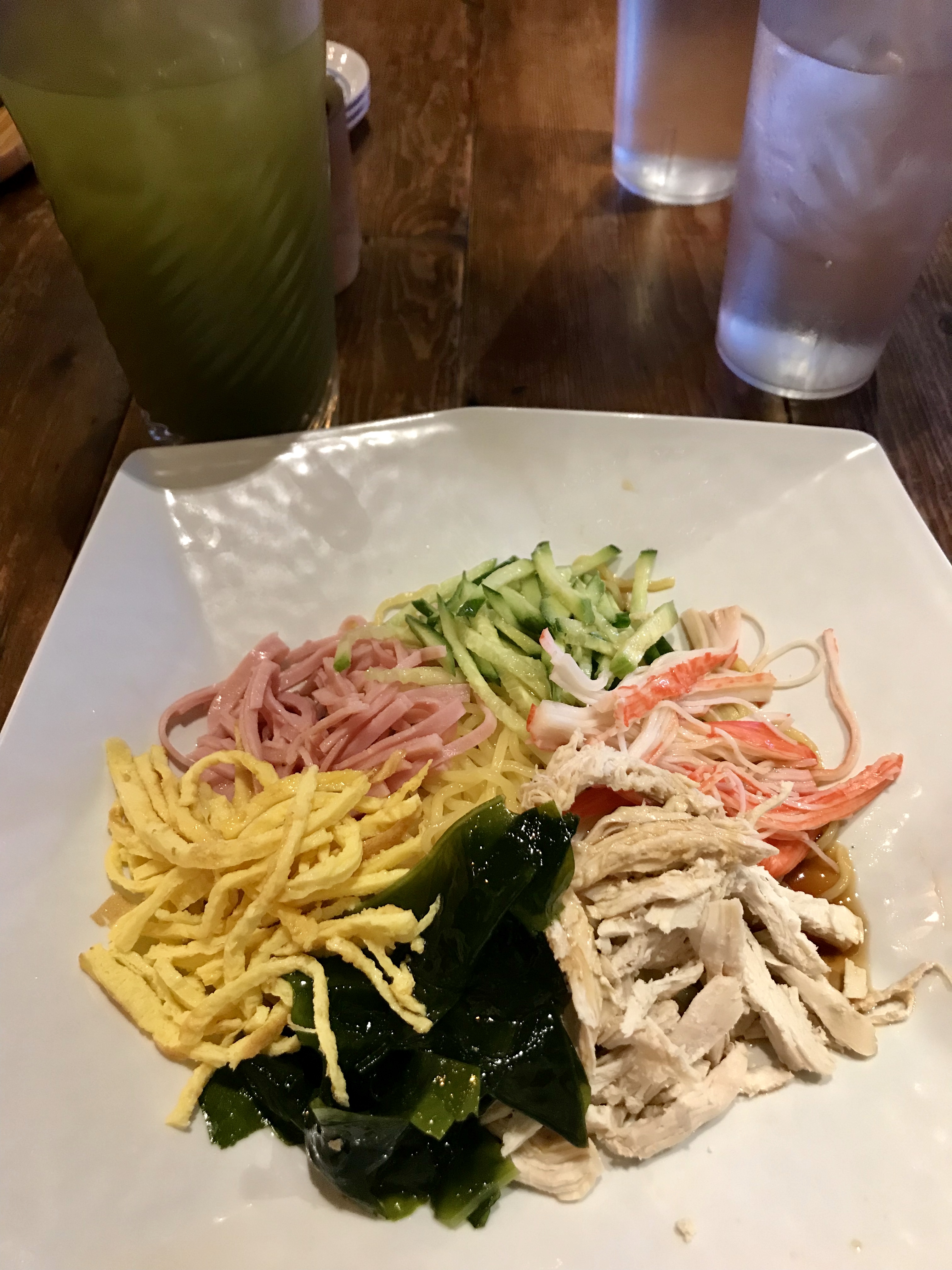
But the golf gig brought him someone essential to his success today: his wife Eri. They met on the golf course and everyone who frequents Ramen Tatsu talks about her ebullience in greeting customers. While Wayne garners much of the accolades, he is quick to acknowledge their partnership. When I told him one of the best things I have had there was the summer cold noodles, he said, “Oh, that’s Eri’s recipe.”
It took Wayne a couple years for him to fully embrace the ramen idea his father—now living in Vegas—first presented to him. Vegas was cheaper than L.A. and there was a dearth of ramen restaurants. He did his research. It was the right time, but many decisions. Chinatown—basically Spring Mountain Road—was hit or miss with some areas of low crime (mostly theft and vandalism) and others gentrifying. They found a place near the newly successful Asian BBQ and Noodles, a place popular with young urbanites. At first he would have a family friend cook, but that didn’t work out. Egos collided.
The details of Wayne’s success story were cloudy to me, and I knew we would be cutting through Vegas on the tail end of a two-week Western road trip that took us from Redondo Beach to Tucson (to see Barb’s mom and sister Liz) to El Paso (for red enchiladas at L & J’s Café—also three days after the shooting) to Marfa, TX to see ClaesCoo’s Monument to the Last Horse. From there we went up to Midland and stayed with our son’s girlfriend’s parents. (Thanks for the homemade meal, Fritch and Lauren—the steaks from Midland Meat Co. were perfectly cooked!) We ventured north through West Texas, stopping for incredible brisket and pork ribs at Pitforks & Smolderings outside Lubbock. After a brief stop at Cadillac Ranch (disappointing and stupifyingly touristy) we sluiced through two thundering rain showers in New Mexico finally arriving in Denver where we quaffed a late night hazy, juicy beer at Ratio Brewing.
Whew. That was a lot of driving. I loved almost every minute of it as we also listened to Wanderers, Chuck Wendig’s insanely entertaining 32-hour audio-novel about zombie-like sleepwalkers. Religion, politics, rock’n’roll and science converge seamlessly and believably in this dystopian thriller. It’s like Stephen King only better, deeper. The next morning we met Barb’s cousin, Lauren Kummer, outside the Denver Art Museum and coo-ed over ClaesCoo’s The Big Sweep. From there, our final destination: our family cabin, Luther Lodge, in Rocky Mountain National Park for a week of relaxing and hiking with my brother and sister-in-law from Minnesota, Joel and Karyl.
Realizing that we would by hitting Vegas on a Sunday, Wayne’s day off, I messaged him asking if he’d like to meet us in front of Typewriter Eraser, outside the City Center near a foot passenger bridge over the Strip. He said he would.
Before I finish his story, let me introduce ClaesCoo’s iconic Typewriter Eraser sculpture. There are three identical steel and fiberglass 19’ 4” sculptures called Scale X, in Seattle, Washington D.C. and Las Vegas constructed in 1999. There are, however, other iterations of it in drawings and soft sculpture forms, and according to a recent exhibition at the Norton Simon Museum in Pasadena this once ubiquitous typing tool was always an obsession for Oldenburg. As a kid, he remembers fondly fiddling with it in his dad’s office. Why it took him so long to cast it in permanent materials, is curious.
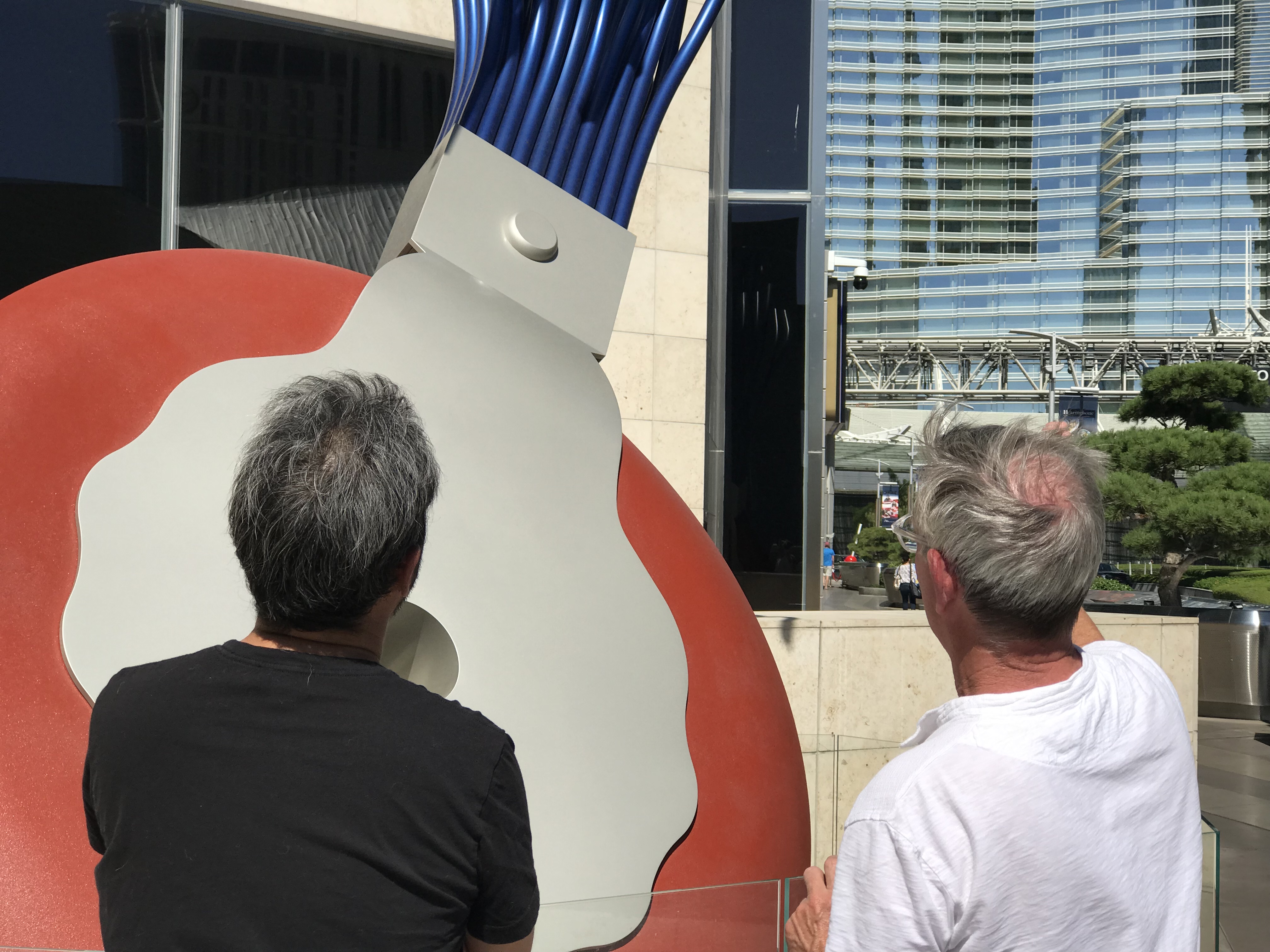
This one resonates with teachers and writers of my generation, certainly. But didn’t we all have passive/aggressive, love/ hate relationships with this eraser? You can still buy an Eberhard Faber 6587 Typewriter Eraser with Brushon Amazon for $6.99. But why would you? The pinkish eraser circle was not easy to use or accurate in eliminating ink mistakes. How many papers did I rip a hole into, compounding my first mistake? Plus, I rarely used the blue bristles, not caring what happened to the eraser particles that shimmied down through the porous machine.
Still, as an object—with a function—it is geometrically unique and if not exactly beautiful, it nestles up to beauty. Circle plus bristles, smooth plus rough, twisty but firm. Contrast the solidity of the circle with the bendable bristles: the tactile thumb-rubbing of the thing while one contemplated the text at hand. Or your hand might palm the whole thing. I remember flipping it through my fingers like a magician would coins. It was therapy, especially as I couldn’t quite manage the syntax of a sentence or find the right word. I needed it at my ready.
It is interesting that Claes and his wife Coosje have it tilted at an angle as if it has just fallen from the sky. (Many of his sculptures appear this way—but more on that in another post.)
It is balanced on that one edge of the circle, which, in real scale worked well initially to erase, but after friction flattened the edge worked less successfully.
Barb and I first saw an early version of the Typewriter Eraseron a road trip we took out east from Sheboygan, Wisconsin with her younger brother Pete and sister Liz in the Spring of 1986.
It was a soft sculpture form about 6 feet high, in my memory. And it might have been outside a museum in Philadelphia or in Washington D.C. We all laughed when we saw it and posed next to it for a picture which I have since lost. I might have forgotten about it, except when I saw that it was Claes Oldenburg and I knew he was the one who did Minneapolis’ Spoon Bridge and Cherryand the Three-way Plugat the Walker Art Center, it made a deeper impression.
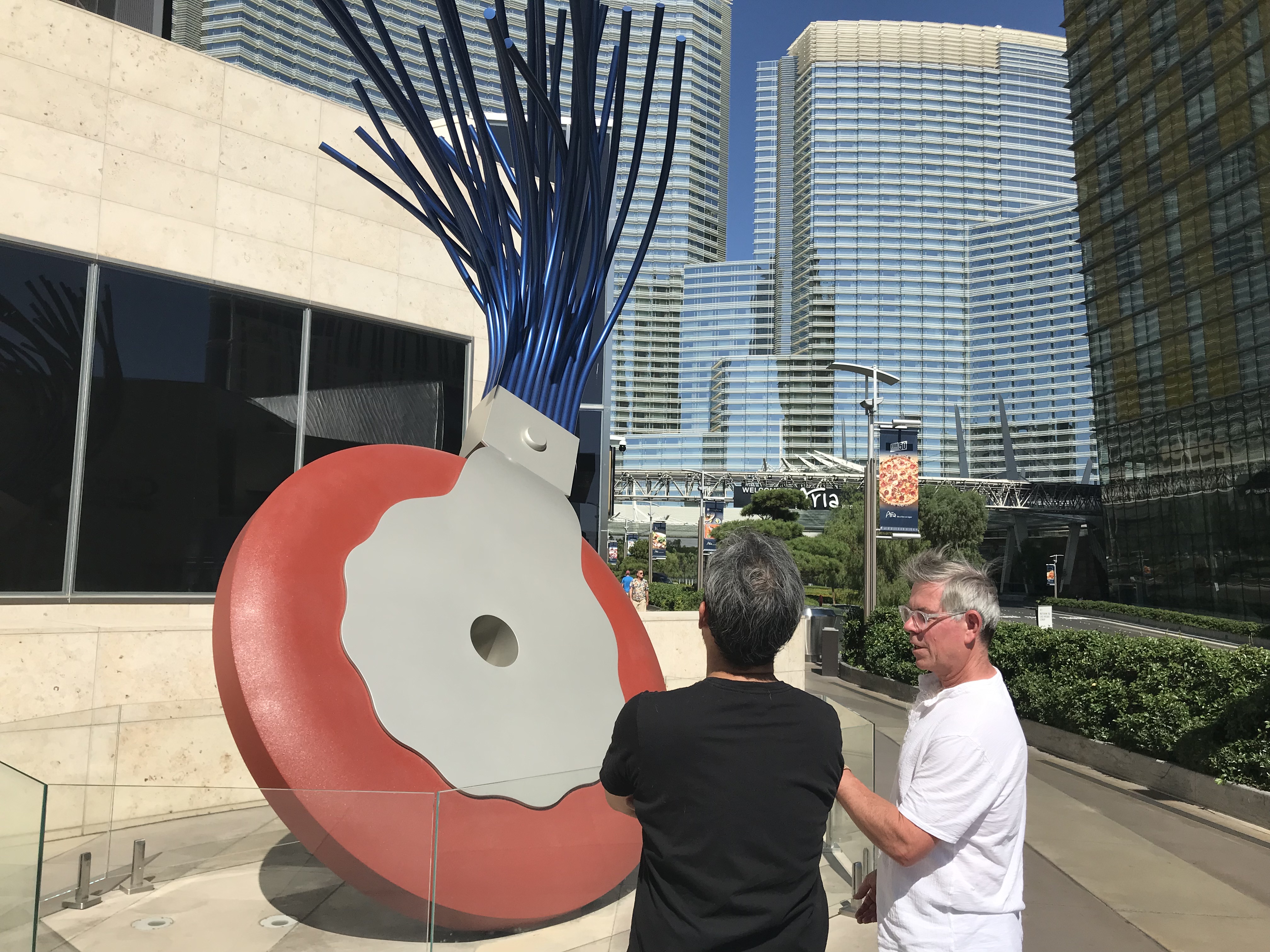
One would think Las Vegas, The Kitsch Capital of the World, would be the perfect resting point for a Claes Oldenburg sculpture. And it is. Just not this one. The one that works is at the campus of UNLV, and I’ll be talking about his 1981 giant Flashlight in another post. This one just doesn’t work for me. It is too diminished by tall buildings, sleek-gaudy hotels and big kitsch. In a weird way, I see ClaesCoo as pop art but not kitsch.
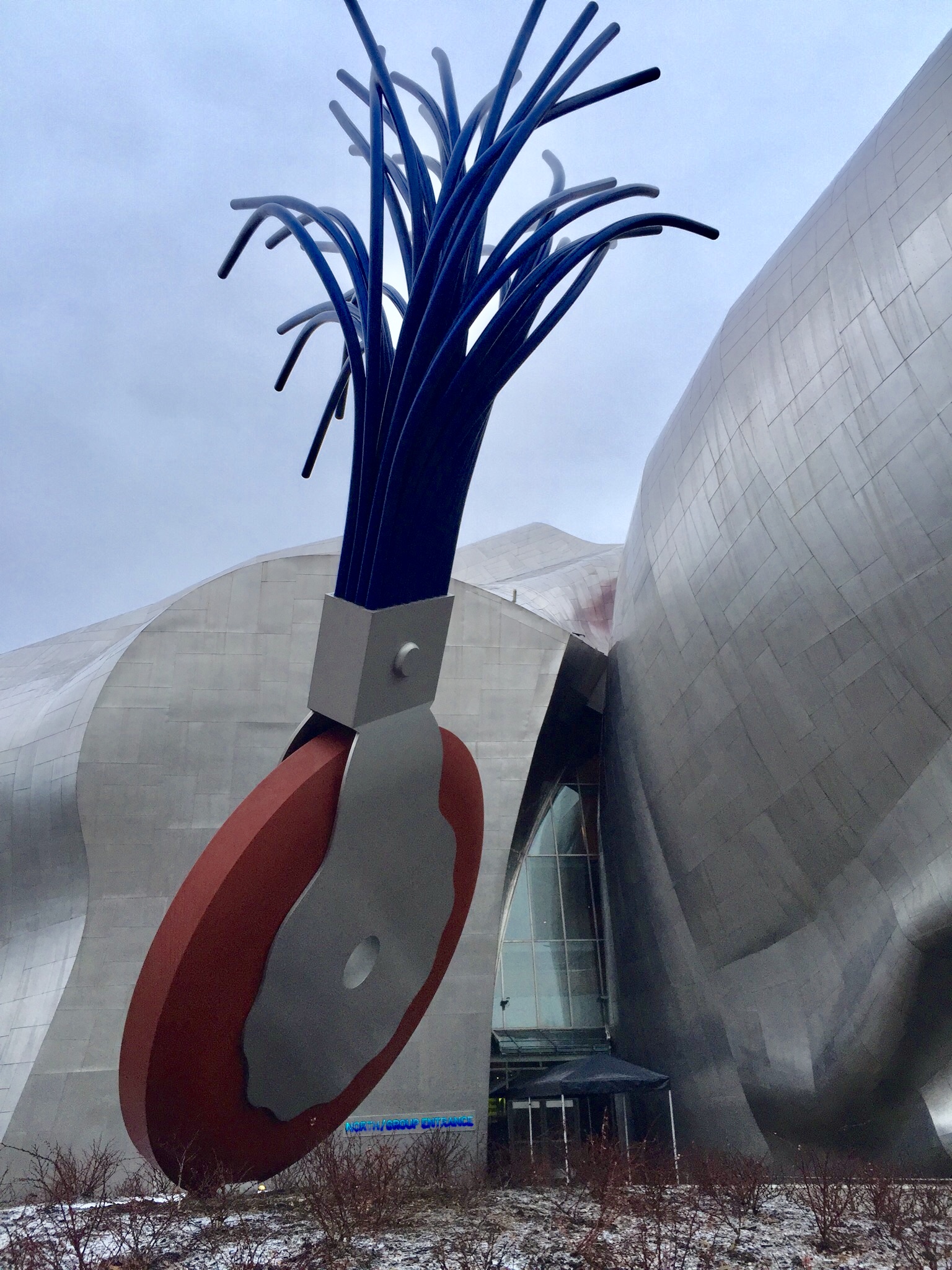
Scale X: Typewriter Eraser does work well, however, in its current location in Seattle. That would be on a dead-end roundabout on the Seattle Center’s grounds adjacent to The Museum of Pop Culture, formerly the Experience Music Project, designed by Frank Gehry. I was only there for a few minutes one winter’s day three years ago. The way it is slightly elevated on the circle gives one the feeling that it has not only just landed but might spin off again.
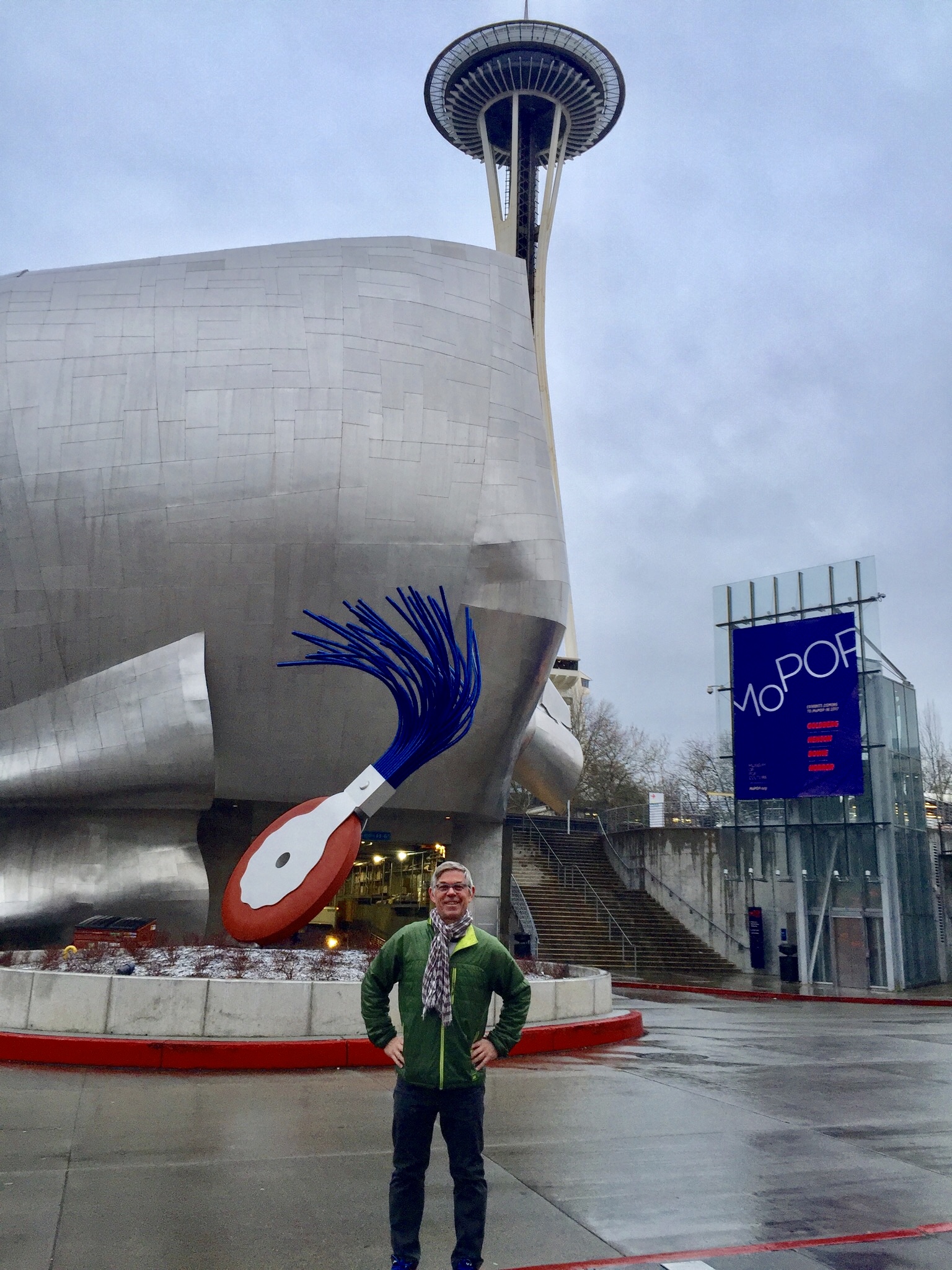
With the monorail cutting through the shiny titanium of Gehry’s homage-to-Jimi Hendrix behind it, and the Space Needle looming in the distance, one expects to hear the theme song to the Jetson’s descend from the clouds—always clouds. The bright blue and red hues of this steel and fiberglass sculpture offsets the silver of the museum and the gray skies.
I love this sculpture as an abstract object devoid of purpose and as a real thing. Like Gehry’s steel approximation of smashed guitars, it has movement and stillness. I’ve come to believe that ClaseCoo’s approximation of a typewriter eraser—more than many of his other sculptures—would succeed or fail not as an idea or concept but as a product of placement. I have not been to see the third outdoor replica in The National Gallery of Art’s Sculpture Garden in Washington D.C. Pictures show it resting comfortably on grass with space around it in a way that is reminiscent of his Shuttlecocks on the gorgeously expansive lawns of the Nelson Atkins Museum of Art in Kansas City.
Wayne and his wife Eri also had crucial decisions to make of their version of ramen. Was their location right? Would their proximity to Asian BBQ & Noodles diminish or increase foot traffic? Would they be able to get the same ingredients as in Japan and at what cost? Would they strive for authenticity? Is authenticity even a real thing in Vegas?What would the décor look like? Were they catering to Japanese people or Caucasians? In his research, he found out that most ramen restaurants in Vegas attracted a non-Asian clientele.
After things went sour with his original chef, Wayne made a crucially correct decision: he would go back to Osaka to study and learn and practice the Art of Ramen. He got into one of the two most prestigious ramen schools in Japan, trained, collected and adapted recipes and headed back to Vegas.
He opened in the Spring of 2013 but then shuttered down, reorganized and reopened again in October. The first year was tough. He called and wrote letters to food writers, but many failed to respond. He finally got a break in 2014 when Brock Radke, a food critic from the Las Vegas Weekly came and raved about not only his curry ramen but his spicy tonkotsu. More people arrived.
(Some clarification: Tatsu means dragon; tonkatsu is fried pork cutlet, and it’s what one gets at L & L Hawaiian; tonkotsu is pork broth.)
Later, Nicole Rupersburg, a food writer from Thrillist picked Ramen Tatsu as the best tsukeman in town. When I was eating there, tsukeman was buried on the last page of the menu. Tsukeman has become the rage on Sawtelle Blvd.—Japantown is close to UCLA—in Los Angeles. The noodles are cold and served separate from the broth—one dips the noodles. Outside of Japan and L.A., it’s a difficult dish to find. But Wayne has it.
It’s heartening for me, a former pop music critic, to see the food criticism has some effect on business. More people found their way to Wayne and Eri’s modest restaurant after these positive reviews came out.
After talking for nearly an hour in front of the sculpture Wayne and Barb and I headed back to our parked cars—one free hour of parking is standard in Vegas—and Wayne told us plans to open a second restaurant, possibly in Portland or Minneapolis. “If you opened in Mpls., you have 30 of my relatives show up on the first day,” I told him. He laughed. I doubt that would be the clincher for him; I am, however, looking forward to the day we can meet at ClaesCoo’s Spoonbridge and Cherry sculpture with a terrific view of the Minneapolis skyline and then head over to his restaurant for a spicy dish of tonkotsu.
 Claes, Coosje and Me
Leave a comment