CLAES, COOSJE & ME
a travelogue, a rendezvous, and a critique
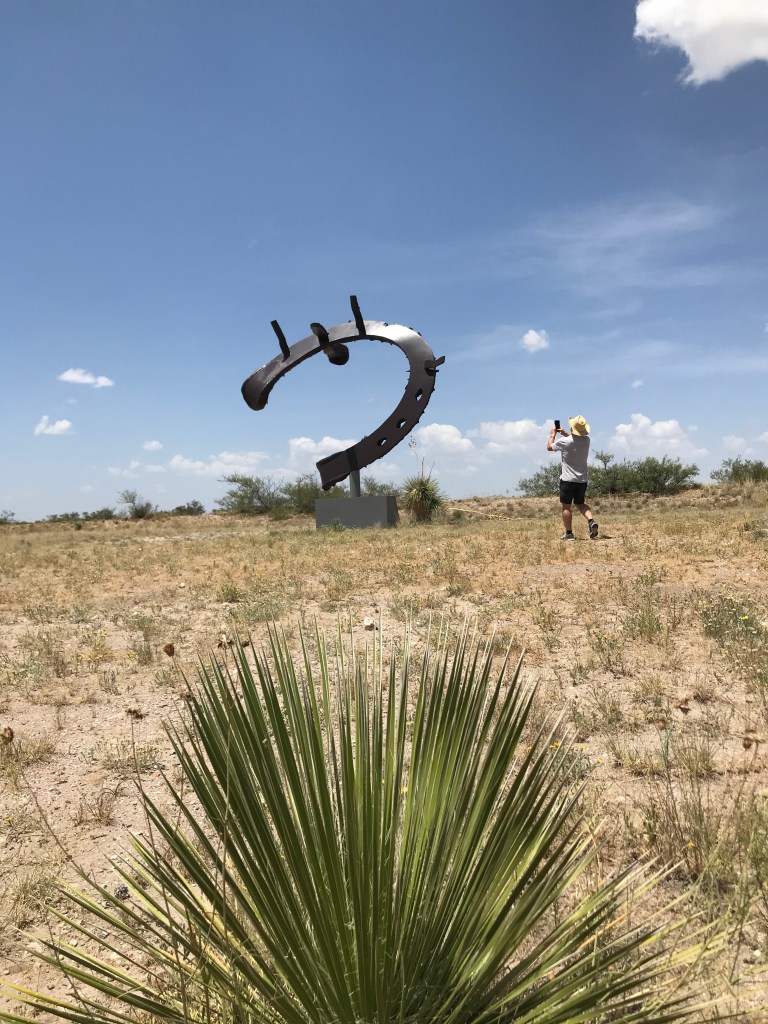
Where: Marfa, Texas
Installed: 1991
Visited: July 27, 2019
Met: A roadrunner, a skunk and a jackrabbit
Blog Entry: August 25, 2019
This is the story of a table and four chairs and the silly, remarkable three-year journey it made from Minneapolis to Los Angeles. Getting it home, against all odds, felt like a pyrrhic victory, but I may not know until I’ve finished writing this.
This essay is also the story of how two road trips intersected in West Texas. And possibly it is the story of how one old obsession—midcentury modern furniture—and one new obsession—ClaesCoo sculptures—converged like mind pretzels.
Monument to the Last Horse—Louie was his name—is a story best understood in the dimension of time: a hundred years’ worth. So we have a geographical journey to an x-marks-the-spot; that spot, however, has witnessed the most bizarre, seldom-heard tumult of history. The ClaesCoo sculpture should not be viewed without that history-of-place knowledge.
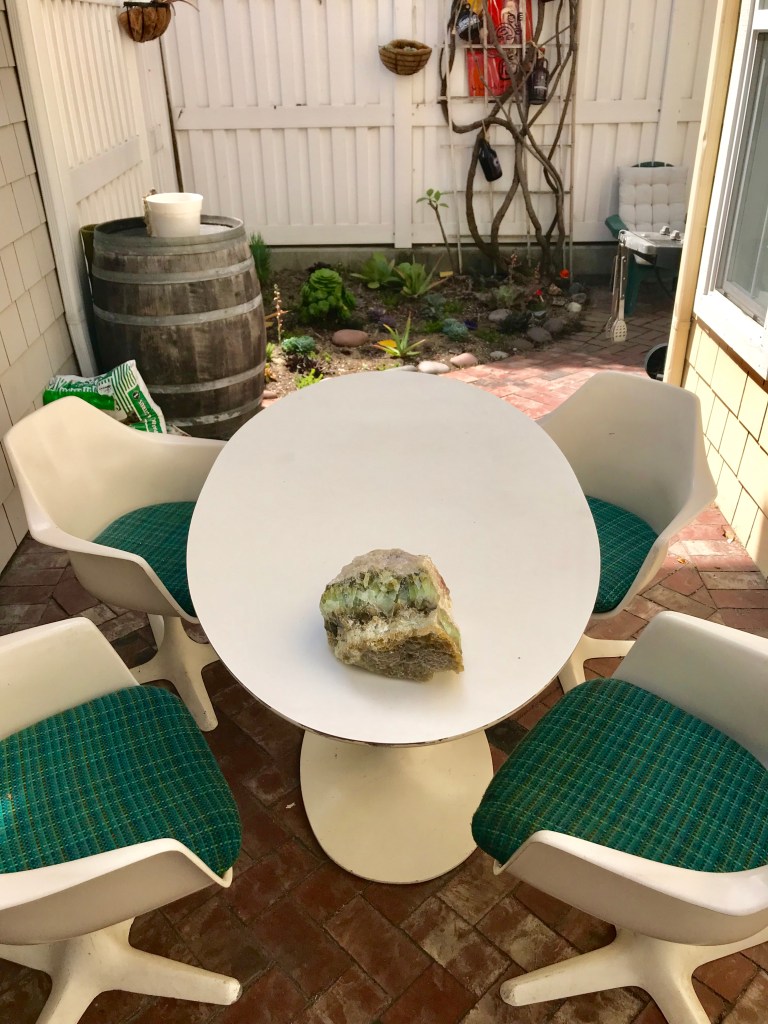
Today the table and chairs rest comfortably in the garden alcove with a calcite-emerald gem Barb picked up at a rock shop in Marfa weighing it down, suggesting final destination. We’re not quite sure what to do with it at this point, but the late-summer surprisingly mild and breezy Los Angeles weather gently anoints the table’s sense of belonging. It is a Burke table, I’m guessing early-60s, and it’s not worth that much. Still, it’s a rare, little treasure, and I doubt our neighbors have one.
Barb and I started collecting mod furniture in the mid-1990s when we tripped out to Palm Springs. We were flat broke and picked up modest side tables, lamps and such as therapy (see we’re rich, we just bought a lamp). When we moved to The Twin Cities in 2000, we could only find two antique stores that had even heard of Charles and Ray Eames—and the Minne-apple is a rather cosmopolitan city. Die-hard modernists were few throughout the U.S. twenty years ago. One day, we walked into Timelines on Snelling Ave. in St. Paul, saw an Eero Saarinen white pedestal kitchen table and six tulip chairs for $700 dollars and bought it. We still have it, only it’s not Saarinen: it’s Burke, based in Dallas, not Grand Rapids, Michigan, or East Greenville, Pennsylvania.
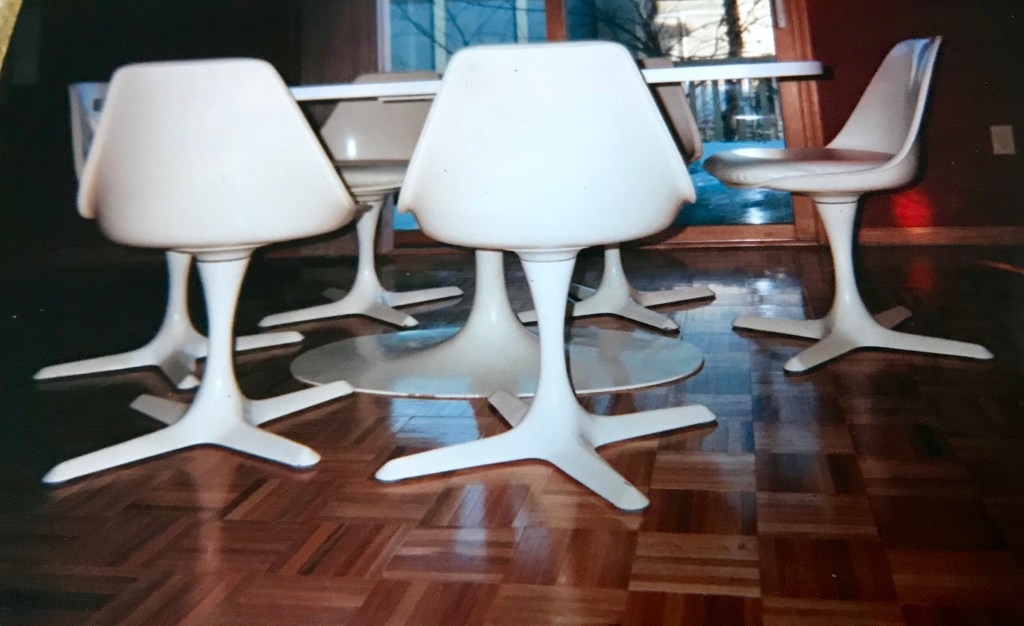
The Burke base is propeller-like, while the real Tulip Chair original has a round base. They were copying him until Knoll Furniture sued. Or maybe they didn’t sue. I don’t mind that we have a knock off—The Tulip Chair is my favorite chair of all-time (what’s yours?), and it will go down in pop culture history because the Burke chair, not the Knoll chair, was featured in the original Star Trek TV series that ran from 1966-69.
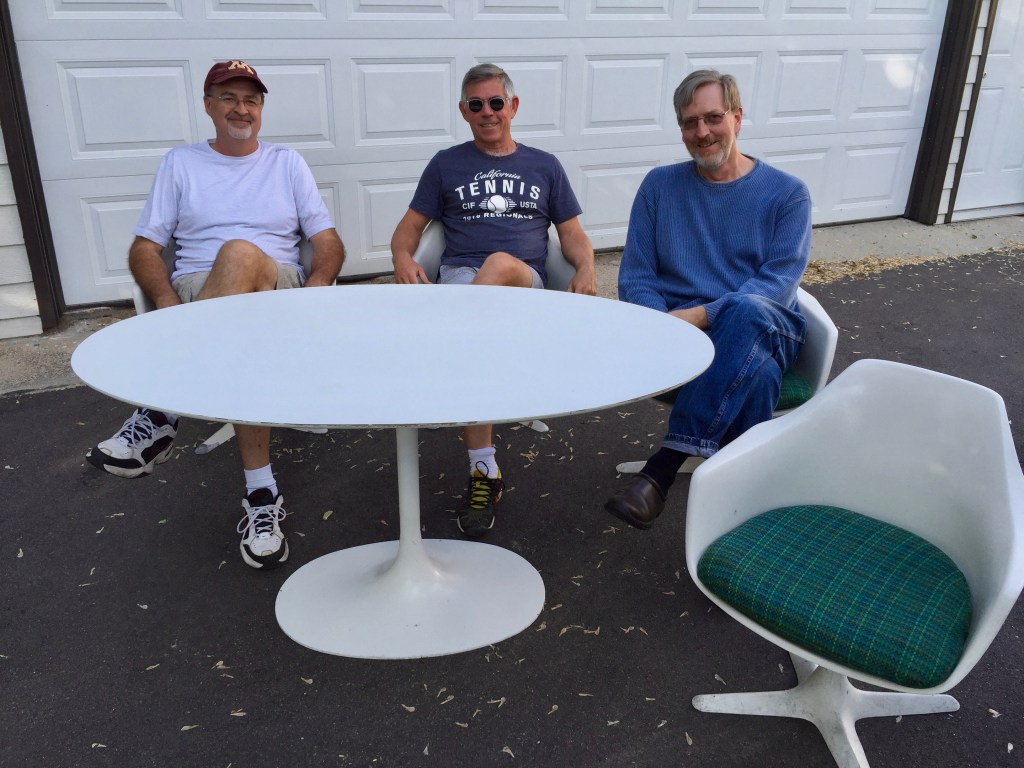
Three years ago, my childhood friend Scott, knowing what I like, saw a smaller oval-shaped white pedestal table one fall day at a yard sale near Stillwater, texted me a picture, and I said get it. $150 is a great price! It just so happened I was in Minneapolis visiting my family—we moved back to So Cal in 2002. He brought it to my brother Pete’s, who brought it to brother Joe, who kept it in his basement for a year and a half.
One summer day in 2018, Joe and his son Jack rented a trailer and hauled it down to Austin, Texas where my son Jake and his girlfriend Emma were living. They were renting a neo-modernist glass and cement block structure from the guitar-player whose band sang “Hey now, you’re a rock star . . .” (I just saw them at a beach festival in Redondo, and I can’t think of their name). Jake thought the Burke would look/fit great. He was right, but then they moved to Telluride, CO and dropped the table at his girlfriend’s parent’s house in Midland, Texas.
The Burke table and chairs were sitting in a Midland garage for a year.
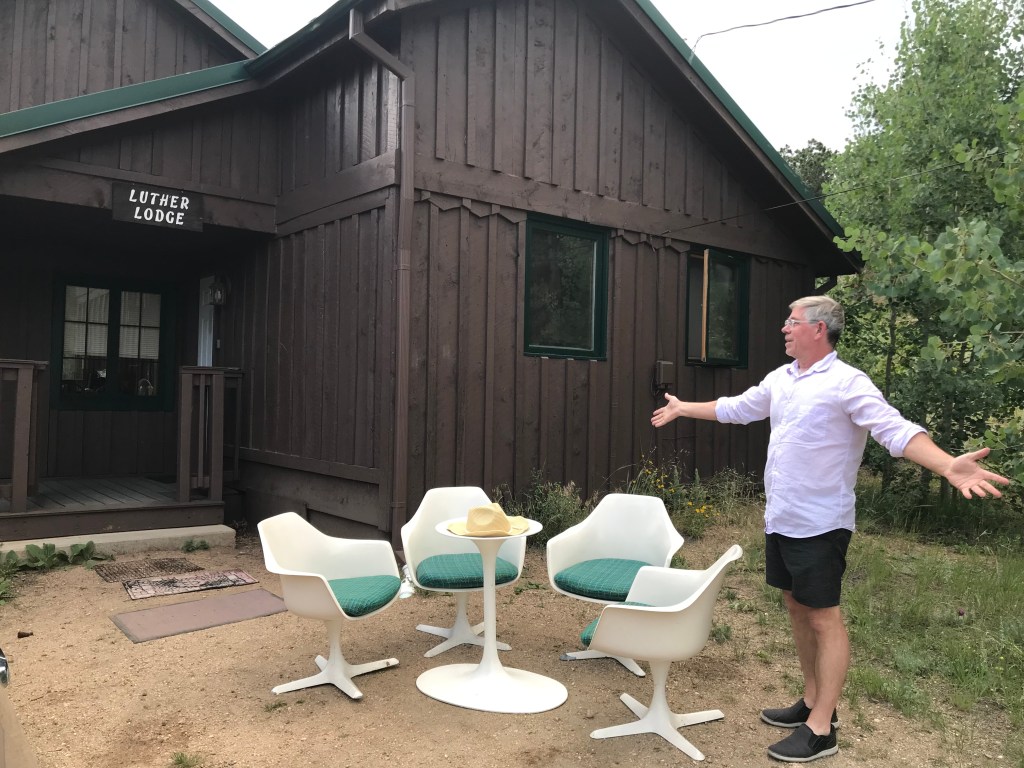
A month ago, after Barb and I had taken 50 students to Europe, and after we road tripped up to Jackson Hole, Wyoming for our daughter Nora’s wedding—welcome to the family, Dan!—we still had one more trip to make before school started again in the fall. Every three years we can rent Luther Lodge, our extended family’s cabin in Rocky Mountain National Park, near Estes Park, CO. It was our year, and we were going to fly. But I wanted to see Monument to the Last Horse, doncha know. And then I remembered our long-lost table.
“If we drove,” I told Barb, “then we could pick up The Burke set.”
“You just want to go to Marfa, I can tell.”
“Well, that too.”
“OK, let’s drive,” Barb said. “I wanna see Marfa too, and, it’s embarrassing that the Philipps have housed our table for so long.”
But would the table fit in our 2003 Acura MDX? Yes, on top. Let’s go.
And away we went on a 10-day, 3000-mile drive. And it was great.
Marfa is a map-dot small town in the highlands of western Texas just north of Big Bend National Park. The NYC artist Donald Judd put roots down in 1970, established the Chinati Foundation to house indoor metal sculptures and showcase his outdoor cement block cubes. The temperature is milder than the rest of Texas and other artists, over the years, have moved in. Before Judd, Marfa was famous as the filming spot for the western Giant, starring James Dean and Elizabeth Taylor.
Here are some thoughts:
One can walk the town end-to-end in 25 minutes.
Our 20-hour stay in Marfa was not long enough.
The stone church and watertower combo is classic.
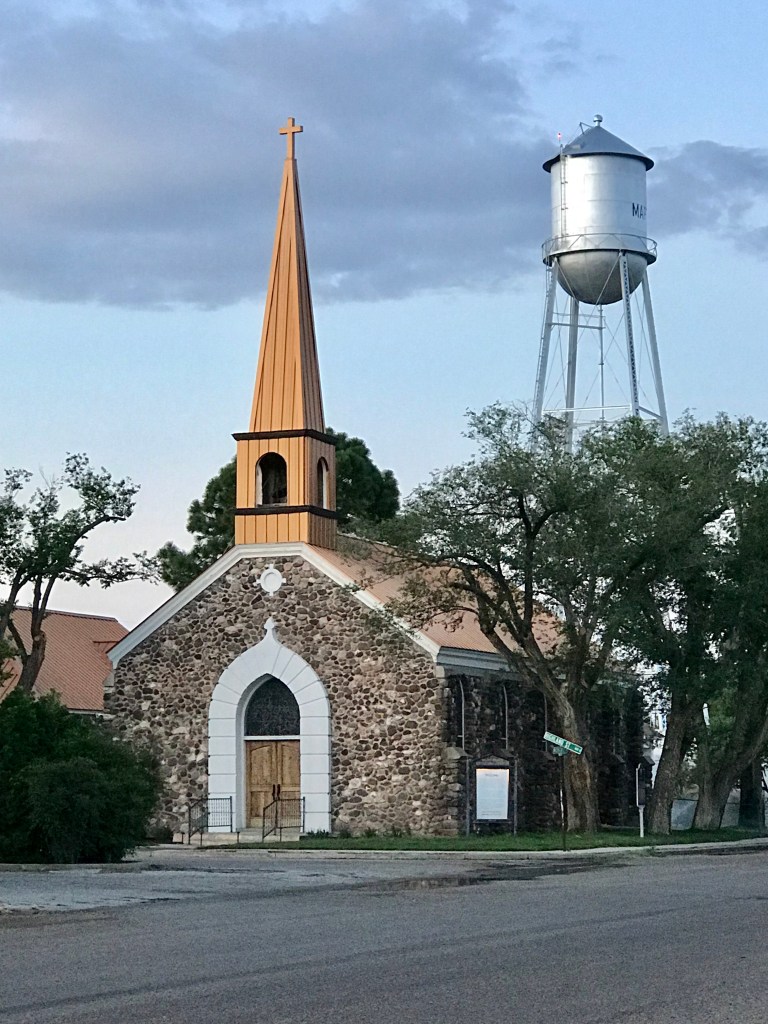
I saw a roadrunner, a skunk and a jackrabbit.
We met a graphic designer, a photographer, a bartender.
It was 95 degrees, and it did not cool off much at night.
The homemade tortillas at Marfa’s Burritos are reason to celebrate.
I bought a Chinati humblebrag cap for $21, but lost it three days later on a hike in Colorado.
For an artsy town, the coffee could be better.
The visiting hours at the Chinati Foundation are screwy. But the people who worked there were informative and friendly.
The town itself is best during the golden hour with Edward Hopper-ish shadows.
Old retrofitted buildings mix well with new artistic studios.
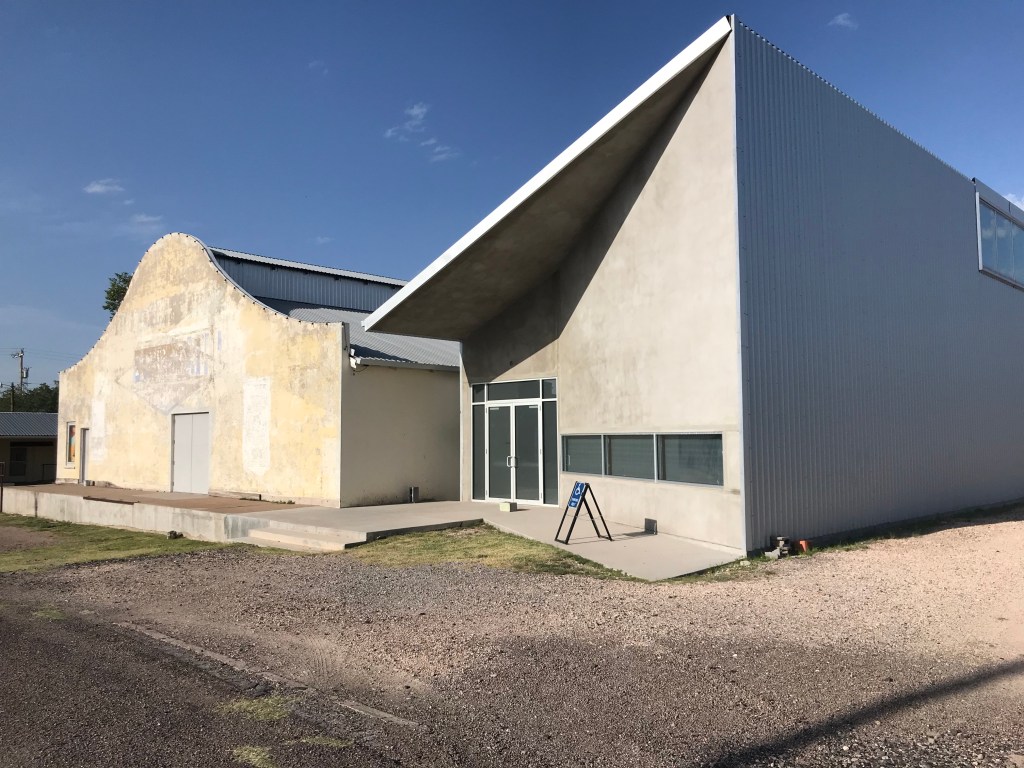
Do the locals and the artists mix well?
Does Homeland Security hassle the Mexican-Americans?
When Claes and Coosje visited Chinati, Judd showed them around. They stumbled upon a plaque to Louie with the Latin inscription Animo et Fide or “spirited and faithful.”
Then they got the Louie story, and that was the genesis of the giant Horseshoe that became Monument to the Last Horse, which was first installed on the plaza in front of the Seagram Building in NYC, and then they donated it to the Chinati Foundation. They would offset production costs by making and selling eight smaller versions of sculpture. Although they hoped to make the horseshoe out of steel with one side coated with adobe, it wasn’t possible, and the sculpture now is shiny aluminum with a polyurethane foam painted for the rough side.
Before I tell you Louie’s story, let’s go deeper into Texas history—it’s a kick. A hundred years ago the U.S. First Cavalry was sent out here to stop Poncho Villa’s raids across the border. Marfa, named by the wife of a railroad engineer after a character in Dostoyevski’s The Brothers Karamazov, grew in its presence. Then, in 1934, with the unit disbanded, Louie, the last and oldest horse at 34 years old, was given a final ceremony.
In the next decade, the barracks were re-opened to accommodate German prisoners of war captured in North Africa. Evidently, some treaty by-law required that captured soldiers would be sent to geographically similar terrain, and so they came to cowboy country and stayed for two years. We didn’t have time to see the two murals by German inmates that have survived.
Judd bought the army base in 1970, and after he died in 1994, the Foundation continued his vision of bringing art and artists to Marfa. In its high desert remoteness, this museum is one of the most unlikely success stories around. Judd’s Untitled concrete cubes are a revelation.
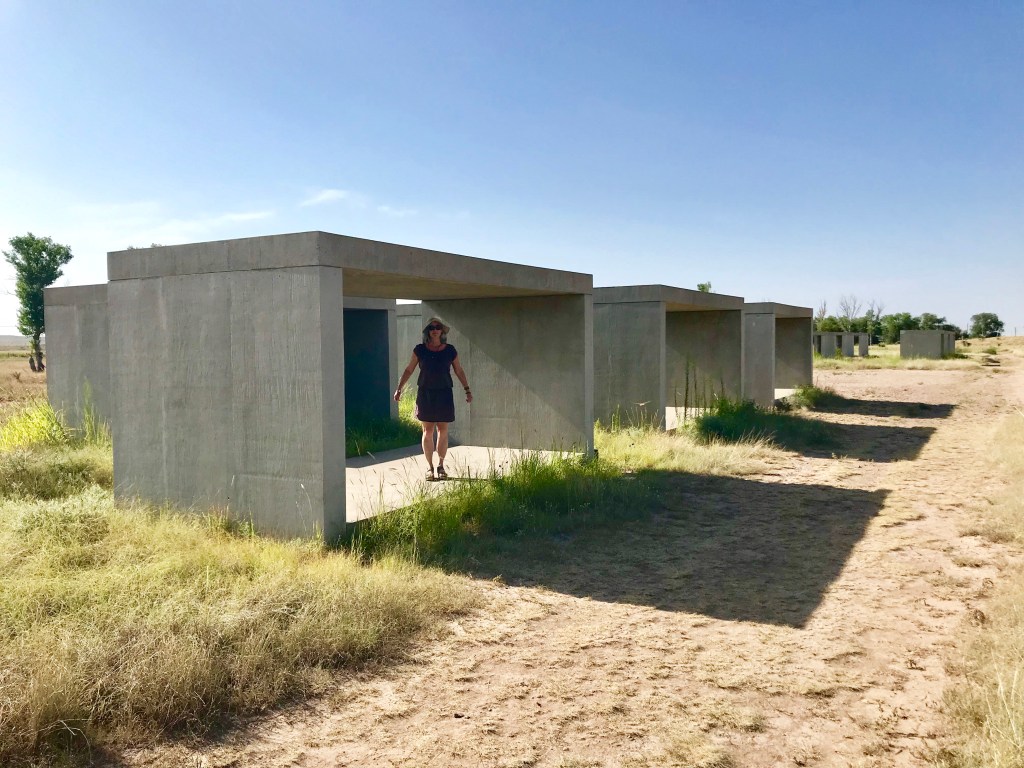
Our first glimpse of Monument to the Last Horse was disappointing. We were attempting to see it upon our 7 p.m. our arrival, but the museum was closed and we drove round and round until we could just make it out from one obtuse angle on a side highway. We got a little closer view of it the next morning while we were traipsing around the cubes, still unable to see it up close until it officially opened at 1 p.m. My question is this: if ClaesCoo put so much effort into angling the horseshoe to frame the sunrise, why can visitors only see it from 1-3 in the afternoon? The most oppressive summer outdoor hours? Sculptures need to be circled and viewed at different times in the day.
But we stayed patient; and finally got to see it up close, and it looked good in these dusty high plains. Perfect, in fact. The amazing yucca plant was not in full bloom, but that alien and exotic stalk showing unexpected life contrasted nicely with the horseshoe.
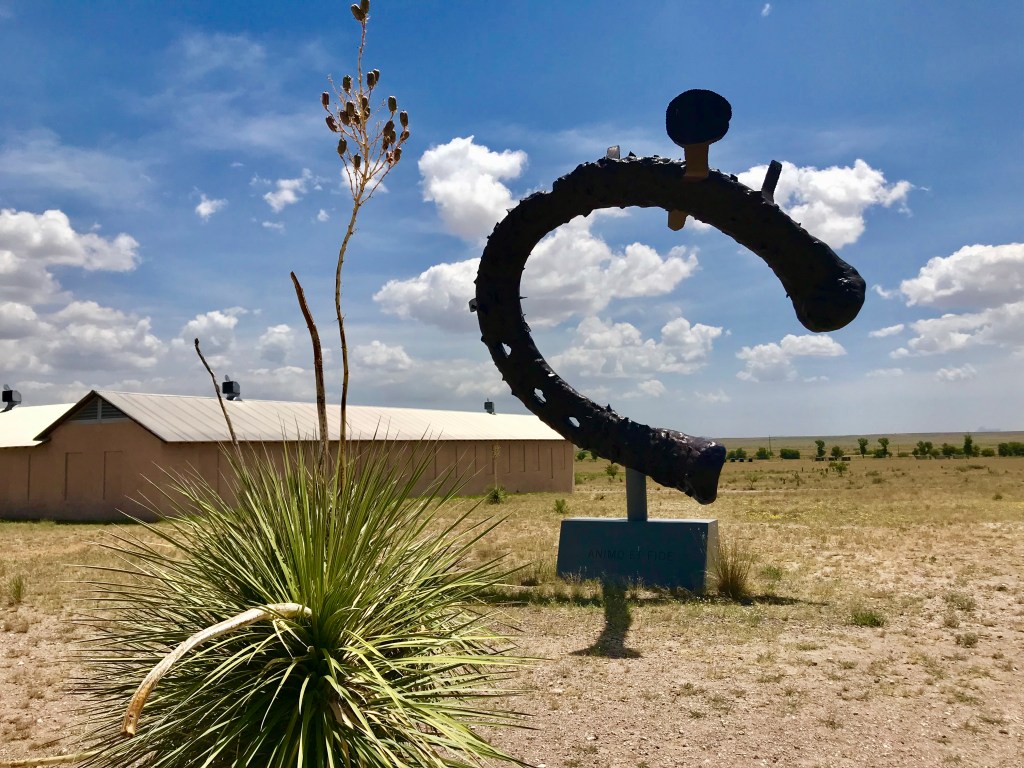
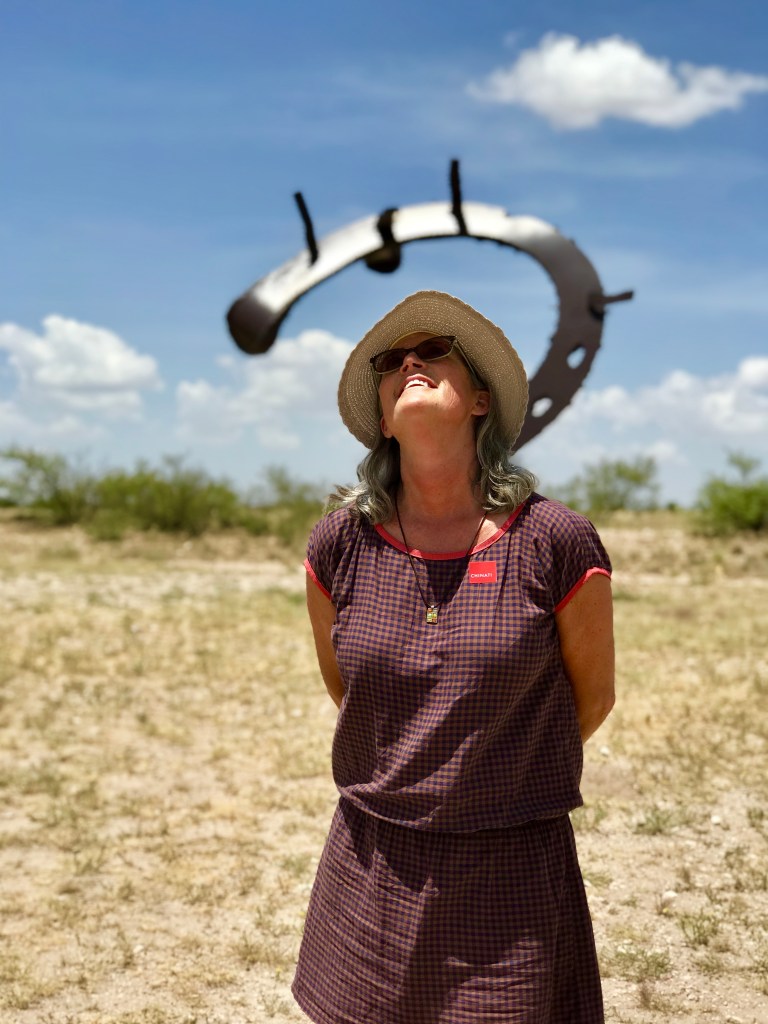
I bought a cowboy hat in El Paso on our way here—even though in Marfa everyone wore caps—and tried tossing it up on the nail. (I’m so insubordinate.) Couldn’t do it, however.
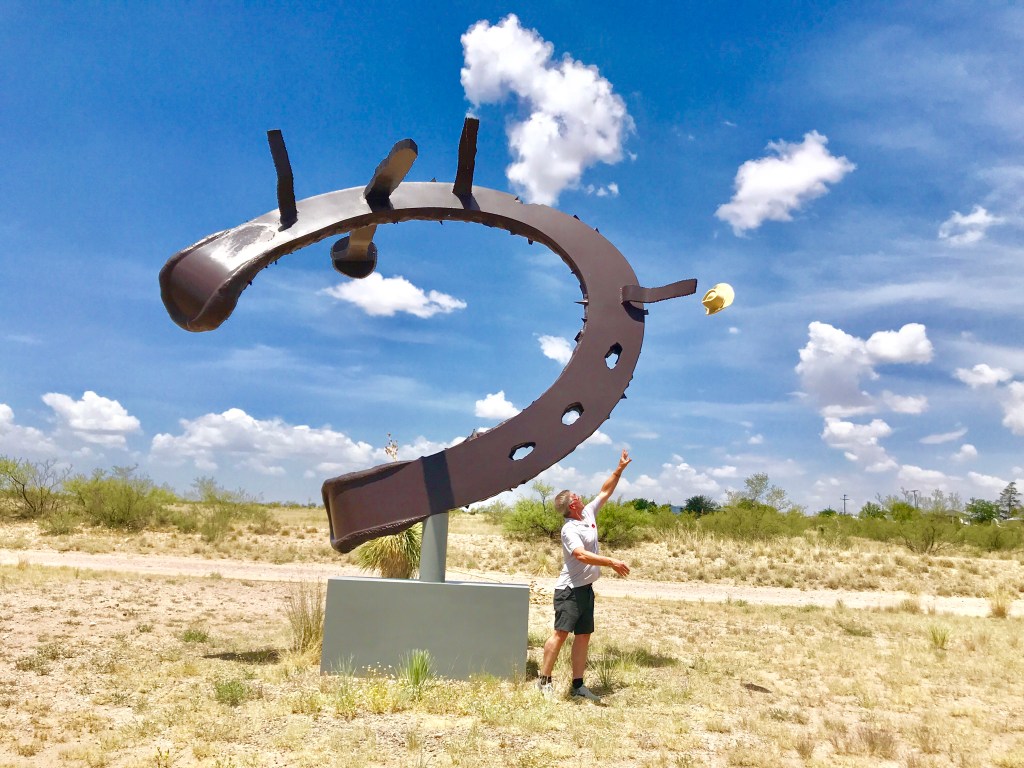
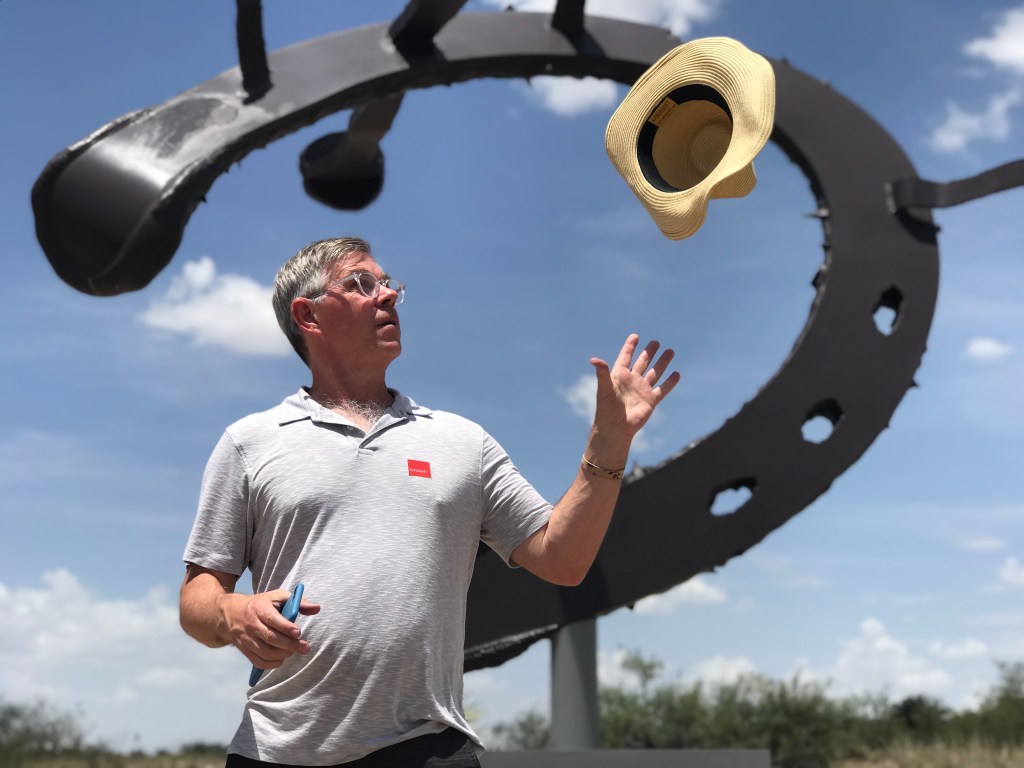
Such a good idea not to sculpt a horse in your tribute to Louie, Claes. We circled it and took pictures. No one was there. We had it all to ourselves—a few couples walked by on their way to a different exhibit—and that was kind of sad. Just think how many would see it if it were still outside the Seagram building? The puzzled faces. That, in fact, is the kind of whimsy and juxtaposition Oldenburg enjoys. It would be like that “Everybody’s Talkin’ “walkin-among-skyscrapers scene in Midnight Cowboy when Texan Joe Buck and Ratso Rizzo take on Manhattan.
But then I saw a roadrunner motor by, and I knew this was the place. Queue The Talking Heads, “This Must Be the Place (Naïve Melody).” Or drop the needle on Alex Simon’s Tone Ranger music: a new desert trance/dance sound soon to be taking the world by storm. In fact, I had his “Cheyenne” song going through my head while observing the horseshoe. I decided I would write my own Alex Simon homage—a knockoff, if you will—when I got home. And I have, and here it is. My song is called, “Cosmic Ode to the Horseshoe Sculpture.”
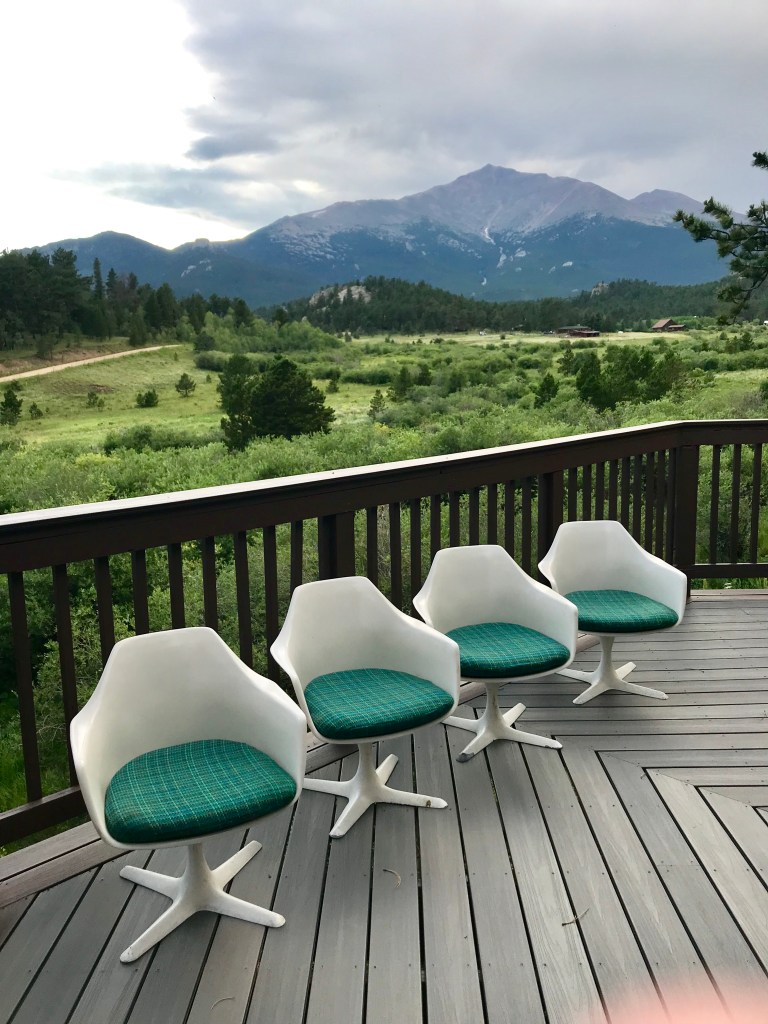
OK. Not my best song, but it captures a certain epistemological vibe, and now I had a knockoff song to go with our knockoff table, which we picked up the next day in Midland. We unscrewed the top and fit it all right in and headed to Luther Lodge. I couldn’t resist placing the chairs on the porch with unparalleled views of Mt. Meeker.
A week later, after a few hikes, and one gargantuan 19-hour hiking endeavor to conquer Meeker (that’s another story), we ventured back to Redondo, stopping merely in Green River, Utah for melons, and to see our former student, Wayne, in Vegas.
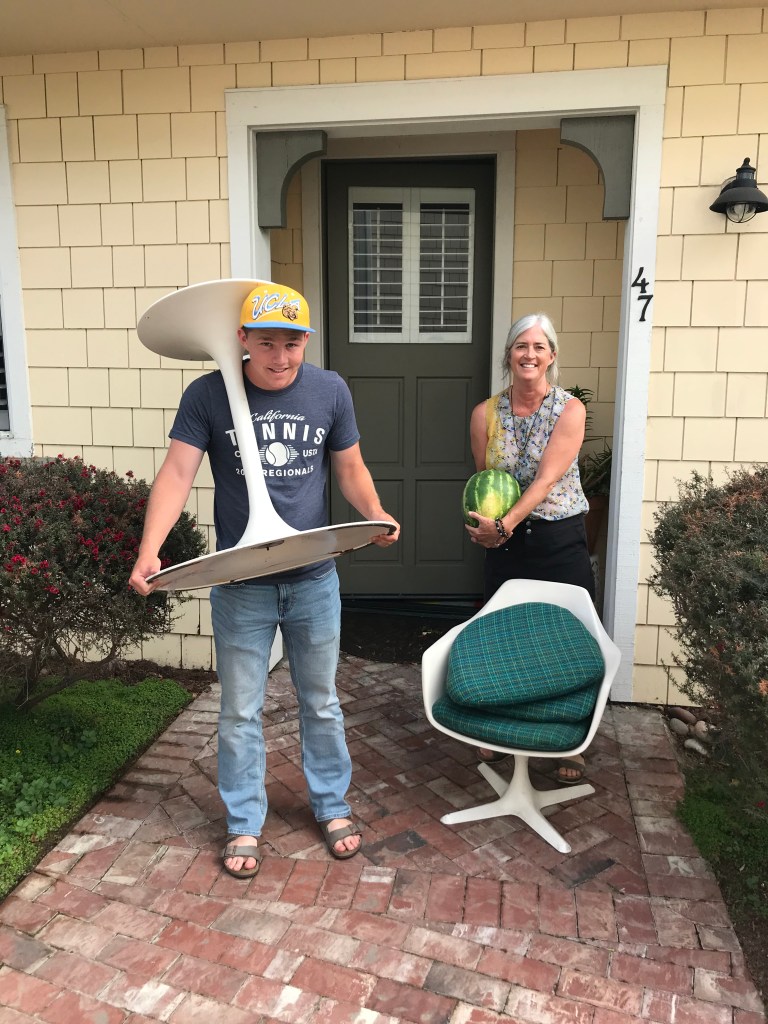
When we made it home, our Louie—not the horse—helped us unload. We’re staying home for a while. I’m still un-twisting this mind pretzel. We’re at home with our table and chairs–until the road trip urge resurfaces.
Wryly but truly,
The Literary Vagabond

 Claes, Coosje and Me
Leave a reply to Karyl Cancel reply